project aldeia
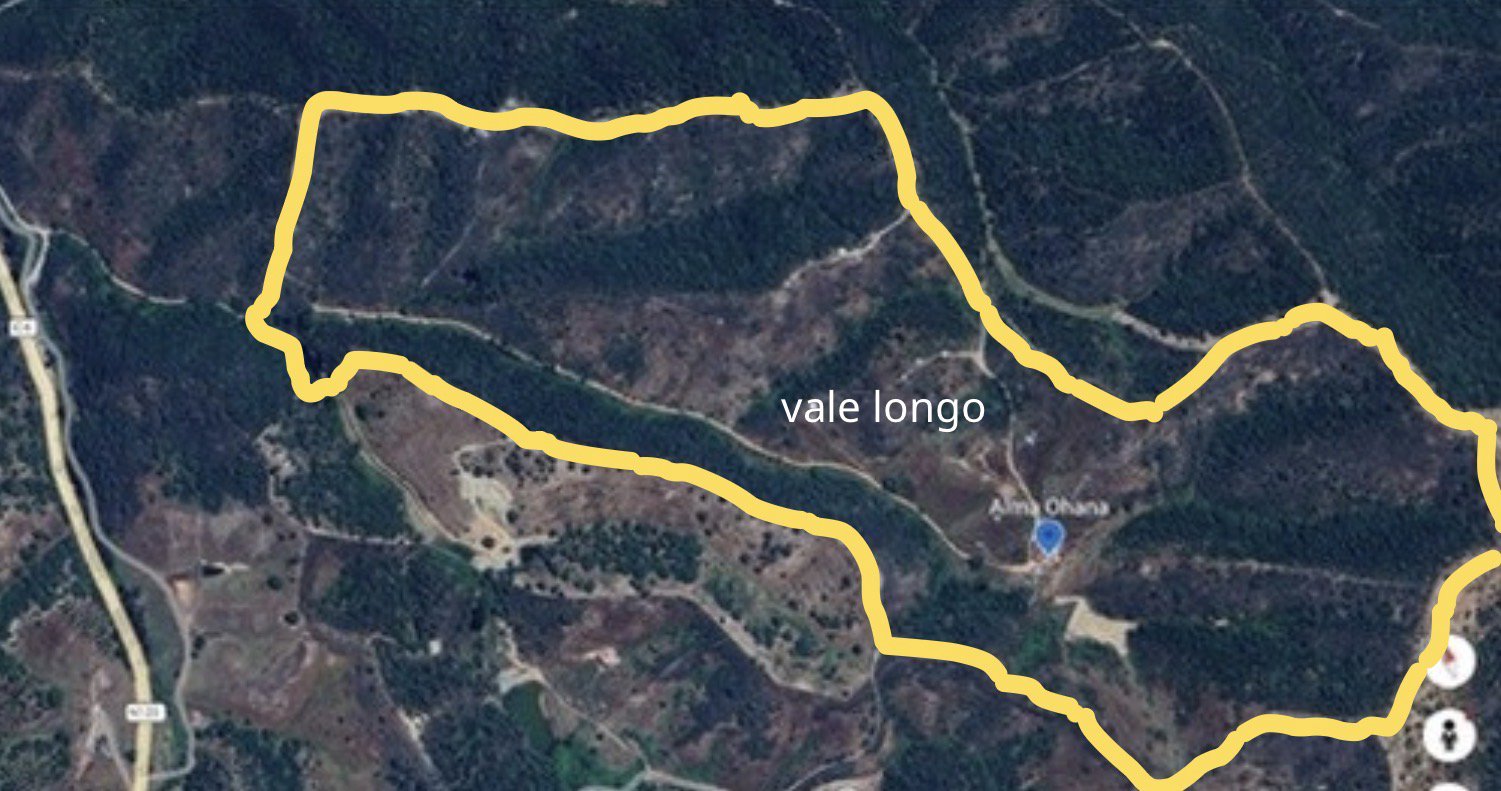
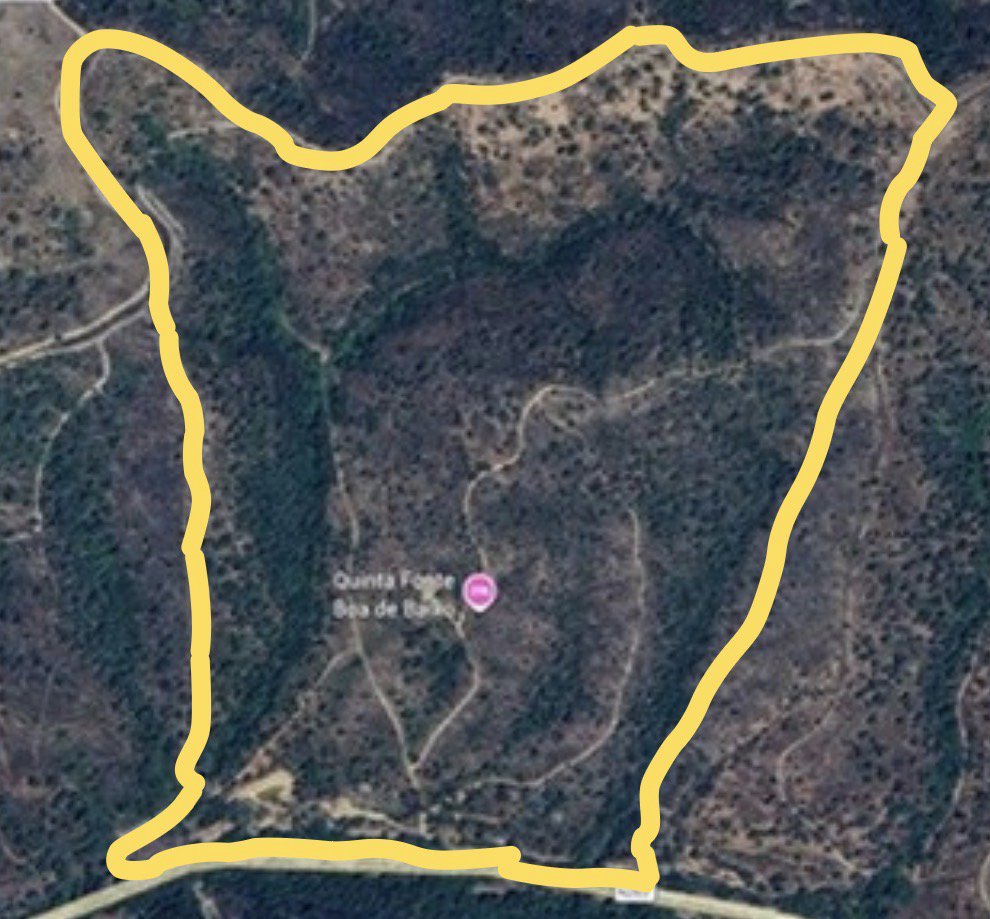
A public offering will be made available for participation in a village development project on 88 hectares situated in the parish of Odemira (Portugal), consisting of two adjacent parcels (Vale Longo, 54 ha, and Fonte Boa, 34 ha). The village will approximately 1 household for every hectare, although not distributed in that way.
participation
land tenure
The land is owned by an integral cooperative, Almaohana, crl. (Cooperative) It is foreseen that the land will be held in trust, in perpetuity, and internally allocated into lease shares. Anyone joining the project will buy at least one share in the cooperative.
lease-shares
Each shareholder will be a member of the integral cooperative. Each share owned by a shareholder guarantees one home site, whether rustic or planned. Any improvements by shareholders remain the property of shareholders.
value
A collective value can be determined and allocated to a certain number of shares in the cooperative. Each share will contribute paying off the debt for the entire property, plus a fund for future improvements, infrastructure, machinery, etc. (perhaps around 10,000 EUR or so per household).
accessibility
In principle, the Project would be accessible to a wide diversity of people, regardless of financial ability. The project aims to attract a high percentage of Portuguese (local and otherwise), young people, as well as people from elsewhere who have been in Southwest Alentejo for some time.
decision-making
Decision-making will operate at different scales simultaneously. Each household will participate in neighborhood scale decision-making. Each neighborhood will make decisions for the development and maintenance of its land and infrastructure as needed, so long as it fits well within the aliveness imperative, which is always at play, although it will manifest in various ways over time, depending on ecological conditions. Project guardians, along with neighborhood representative(s), will make decisions that affect the village as a whole. The decision-making process will be based on a modified form of sociocracy.
organization
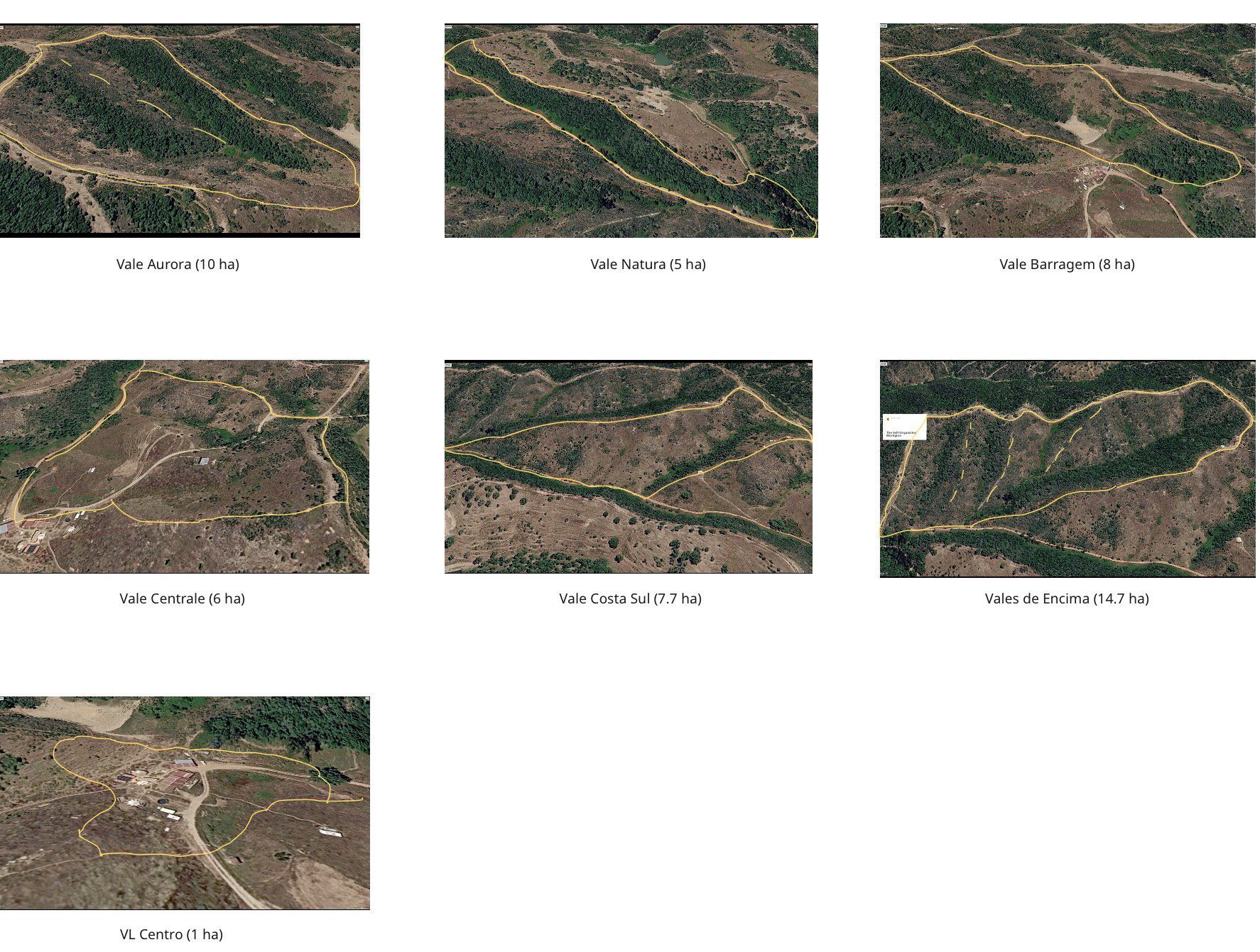
The Project will be an ecosocial experiment in self-organization at various scales: personal, household, neighborhood, village. The Project's land will be organized by "neighborhoods" according to perceivable ecological wholes: valleys or water basins.
self-organization
Each neighborhood group will self-organize to inhabit and care for an ecological whole. The regenerative development of the land will be the responsibility of each neighborhood and its inhabitants.
ecological integrity
Each neighborhood group will commit to an ongoing co-design process to ensure the continued ecological integrity of the neighborhood's ecosystem. The process will be a collective sensing to study the carrying capacity of each ecosystem, the potential for its further regeneration, and how it might be best inhabited (optimal quantity of housing sites and potential neighborhood projects).
community
aliveness imperative
Those stewarding the project will serve to be guardians of the patterns of aliveness of the land, ecologically and socially. This translates into the notion that our mode of living, and everything we do, will bring an ever greater degree of aliveness at every scale, each one of us, our neighborhoods, the village, and the surrounding lifeshed we are intimately nested in, and the surrounding bioregion.
This imperative will be clearly stated before the sale of lease shares. Prospective participants will have the choice to opt in. Once agreed to, these imperatives will be in effect for all and will affect what can be developed over time in each neighborhood. It is the responsibility of each neighborhood to live into and be guardians of their neighborhoods as ecological wholes.
motivations and intentions
The Project intends to provide an alternative to "business-as-usual" way to inhabit land together. This promises to manifest in several ways.
we are an intimate part of any system we would like to have a transformative effect on;
we can only ever change ourselves and by doing so, inspire others; and,
anything else requires the use of force.
initial process for establishment
The initial process for Project Aldeia to secure the above parcel(s) of land is twofold:
1.
Buy out the existing shares of the Cooperative.
2.
Renegotiate the outstanding loan(s) with creditor.
buyout of shares
An initial group of Project Aldeia shareholders will step forward to buy out the existing shares from the founding cooperants of the Cooperative, who wish to sell their shares. The Cooperative has approximately €130,000 of social capital. This translates into 13 shares, valued at €10,000 each.
The Cooperative is owner of the two above parcels totaling 88 hectares. The Cooperative holds two loans, in for each parcel to a private individual.
renegotiation of loan(s)
Once Project Aldeia has taken over the Cooperative, it is in position to renegotiate the outstanding loans, to its creditor. There are two loans, each attached to one of the two parcels:
€400,000 for Vale Longo; and,
€207,000 for Fonte Boa.
The loans are coming due at the end of July, however the contracts are not legally valid, which means their terms can likely be renegotiated perhaps to extend the due date 2-3 more years. This should allow sufficient time to sell the balance of shares for the Project.
option to consider
Since there are legally, two separate parcels, one option is to keep the larger, more developed one, Vale Longo, which is sufficient for our needs initially, and let go of the second, Fonte Boa. This would reduce the financial burden by ⅓ and still leave us 54 ha for our village.
prospectus
legal description
The land has a total area of 88 ha, distributed unevenly in two articles: Herdade do Vale Longo (HVL |Freguesia: São Salvador e Santa Maria, v-31 | 54 ha) and Fonte Boa de Baixo (FBB | Freguesia: São Salvador e Santa Maria, v-35 | 34 ha), each with its own access roads (to Odemira road and Bemposta road, respectively). In addition, there is an urban article embedded in Herdade do Vale Longo of 86,6400 m2, comprising the existing ruin.
land description
The land is composed mainly of ridges and valleys, which are relatively open to sunlight on their southern aspect. Cork oaks are widely distributed throughout most of the land.
The following land types are registered for HVL: cultura arvense, class 3 (46.031200 ha), class 2 (0.250000 ha); prado natural (8.206300 ha); eucaliptal (0.175000 ha).
The following land types are registered for FBB: cultura arvense, class 3 (17.062500 ha); prado natural (3.412500 ha); montado de sobro (13.650000 ha).
water sources
Water is found in abundance throughout the land; it is in proximity to the Tourgal River, which has water year-round and is located within the watershed. HVL has several water mines throughout. FBB has a spring and several mines as well.
current ownership structure
Almaohana CRL, a Portuguese cooperative, owns the land (above articles).
current structures and infrastructure
HVL Center
Rebuilt ruin 85 m2 (pantry, kitchen, temple, dormitory)
Workshop (worktables, tools, equipment, outdoor storage shelves)
Bath house (bath, shower, washing machine)
Storage (2 small shipping containers with a roof in between)
Solar PV system (a central solar PV system consisting of 5 KW (12 PV panels), 12 KW battery bank, controller, and 5 KW inverter)
FBB Center
Outdoor kitchen
HVL Housing structures
Cabin 1: 30 m2
Cabin 2: 40 m2
2 Caravan shelters with deck
1 Caravan deck
water infrastructure
HVL Sources
Rainwater (center)
Constant flow well 7m (groundwater)
Constant flow Well 5m with filter (potable water)
Well garden 6m (unused)
HVL Storage
Up 2000 L (água subterrânea)
Centro 3000 L (água da chuva)
Centro 3000 L (água da chuva)
HVL Distribution
HVL center
Cabin
Garden
4+ home sites
FBB Sources
Spring
Water mine
FBB Distribution
Existing but not active
Productive spaces
HVL active productive garden
FBB inactive garden
further development
HLV Center
The existing single-story clay building at the FBB center will be expanded (both footprint and levels) to take advantage of its urban status. This may include a wall surrounding the Center that creates expanded positive multi-use spaces.
FBB Center
The existing outdoor kitchen will be expanded in a similar way to the HLV center, albeit informally.
multi-household residences
The proposed PDM will allow one 500 m2 structure to be built on FBB and HLV, respectively.
neighborhoods
Less formal, rustic housing and shared structures will be developed in each neighborhood according to the co-design process (stewards and neighborhood shareholders).
infrastructure
Central water, energy, access, and productive systems will be expanded accordingly, as needed.
about organizers
Mario
Mario Yanez (Yanez.earth) will act as the organizer of the collective purchase of Alma Ohana. He will personally commit himself to the land purchase process. He will likely be joined by one or more colleague(s).
background
Originally from the US, Mario has been in Portugal for the last 6 ½ years and has been residing in this part of Alentejo for 2 years. Mario has an academic background in finance, ecology, and complexity. His work experience is in community organizing (around local food), large-scale design and implementation of productive landscapes, and regeneration of social change movements via stewarding/sharing of knowledge.
context
His motivation is to create a viable bioregional economy based on capacity building for regenerative livelihoods, utilizing Project Aldeia as a central resource. Mario has a robust social network globally, throughout Europe, in Portugal, but especially in this part of Alentejo.
use the chat below to express your interest…

Non-existent object
next meeting September 8 at 19:00 Portugal time via http://meet.jit.si/projectaldeia.
Join our Telegram group here: https://t.me/+leHhuOjfg4QxY2Rh
We have a draft charter for review. You must have downloaded the Anytime app and have requested permission to join this platform, to get.